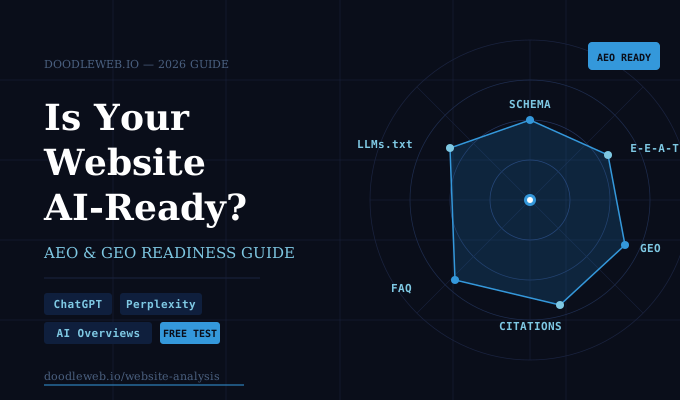

Answer Engine Optimization (AEO) and Generative Engine Optimization (GEO) are how brands get cited by ChatGPT, Gemini, Claude, and Perplexity. The mechanics are different from classic SEO, and the upside is enormous.
Why AI search changes the game
Traditional search rewards keywords, backlinks, and crawl depth. Answer engines reward clear definitions, entity associations, and structured prose that an LLM can extract without ambiguity.
When someone asks ChatGPT "who builds Drupal sites in Seattle", the model is not running PageRank. It is reading content it has indexed and choosing which brand to name.
Restructure content for extraction
Rewrite your top pages so each section answers exactly one question. Use H2s as the question, the first paragraph as the answer, and supporting paragraphs as evidence.
If your reader can scan one section and walk away with the answer, an LLM can too.
Track citations across all the major LLMs
Run weekly prompts against ChatGPT, Gemini, Claude, and Perplexity for your priority queries. Log which brands get named and where you appear. This is your new rank tracker.
What to do this week
- Pick five high-intent queries.
- Audit the top page that should answer each.
- Restructure with question-style H2s and direct first-sentence answers.
- Add FAQ schema where it fits.
- Run citation tests in all four engines and benchmark.
You will not see results in 24 hours. You will see them in 60 days, and then they compound.
Seattle, WA
A full-service digital agency working in WordPress, Drupal, Shopify, Webflow, React, and React Native. We partner with universities, governments, and growing brands to ship sites and products that hold up after launch.